Sustainability

Sustainability

Regenerative Agriculture

farming practice:

Agroforestry

We know the importance of cultivating a symbiotic relationship. That’s why we plant crops like cacao and mango near our coconut trees to increase coconut fruit yields by up to 50%.

We also plant Australian peanut shrubs to prevent weeds from growing that would otherwise suck out the life in our coconut trees.

Placing coconut husks near the trees acts as a fertilizer and gives snakes a place to live. The snakes help protect our trees by eating pests.

farming practice:

Biodiversity

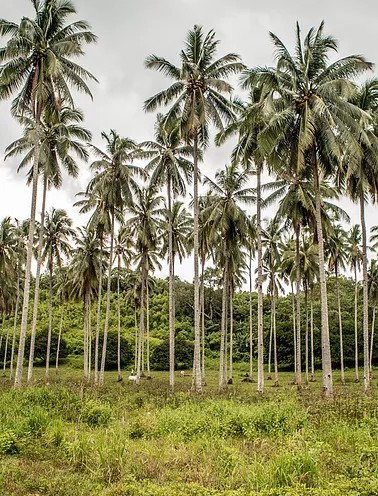
By using naturally growing, fruit producing trees & bushes we eliminate the need to clear land, which in turn promotes biodiversity! This allows for all species natural to the environment to continue to thrive. We don’t introduce foreign non-native species to the area either, which again supports biodiversity. 

Our farming partners own land in the middle of natural jungles. By allowing us to plant cacao, mango and Australian Peanut next to the coconut palm trees, farmers are seeing up to a 50% greater yield in the output of coconuts per tree as well as a coconut that is on average, 20% larger.

Our farmers avoid the use of synthetic chemicals, pesticides, herbicides and fertilizers which in turn preserves the biodiversity of local areas, increases soil fertility, maintains the groundwater quality and health of the local community.

farming practice:

Nitrogen Fixation

We intercrop with cacao, mango and Australian peanuts to provide needed nitrogen to our coconut trees, which results in a more fruitful and healthier tree.

Natural Soil Enrichment

We intercrop coconut trees with nitrogen-fixing plants to naturally enrich the soil and boost plant health.

Chemical-Free Nutrition

Nitrogen derived from natural sources reduces the need for chemical fertilizers, keeping our coconuts pure and safe.

farming practice:

Carbon Sequestration

We help to increase carbon sequestration through no-till and agroforestry methods. Importantly, coconut trees act as carbon sinks that counter the effects of climate change by sequestering carbon dioxide by the biomass and the soil of the ecosystem.

farming practice:

Crop Rotation

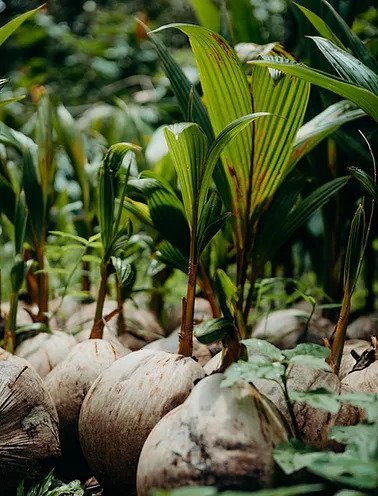
We have no need to rotate crops because we only use naturally growing trees & bushes. We protect present trees and nourish new trees to continue the natural habitat!

farming practice:

Compost

The husks from coconut trees are a natural compost which provide nutrients and moisture. By placing the husks around the trees, we continually create moisture that gives more nutrients and life to the trees.

farming practice:

Perennial Crops

We have no need to rotate crops because we only use naturally growing trees & bushes. We protect present trees and nourish new trees to continue the natural habitat!

farming practice:

Zero Tilling

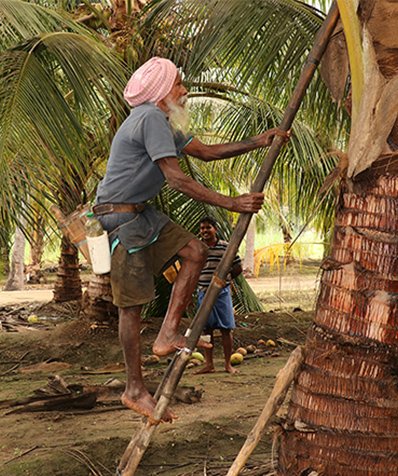
Coconut trees are perennial crops; they live year-round for about 50-60 years, and are harvested sometimes daily throughout their life. A single coconut tree can produce up to 100 coconuts per year! Due to their long lifespan and ability to be harvested year-round, coconut trees require less soil disturbance than non-perennials and have a much higher ability to protect soil carbon

Pure quality. Zero compromise. Fast doorstep delivery.

Zero Waste – Our Complete Coconut Utilization Process

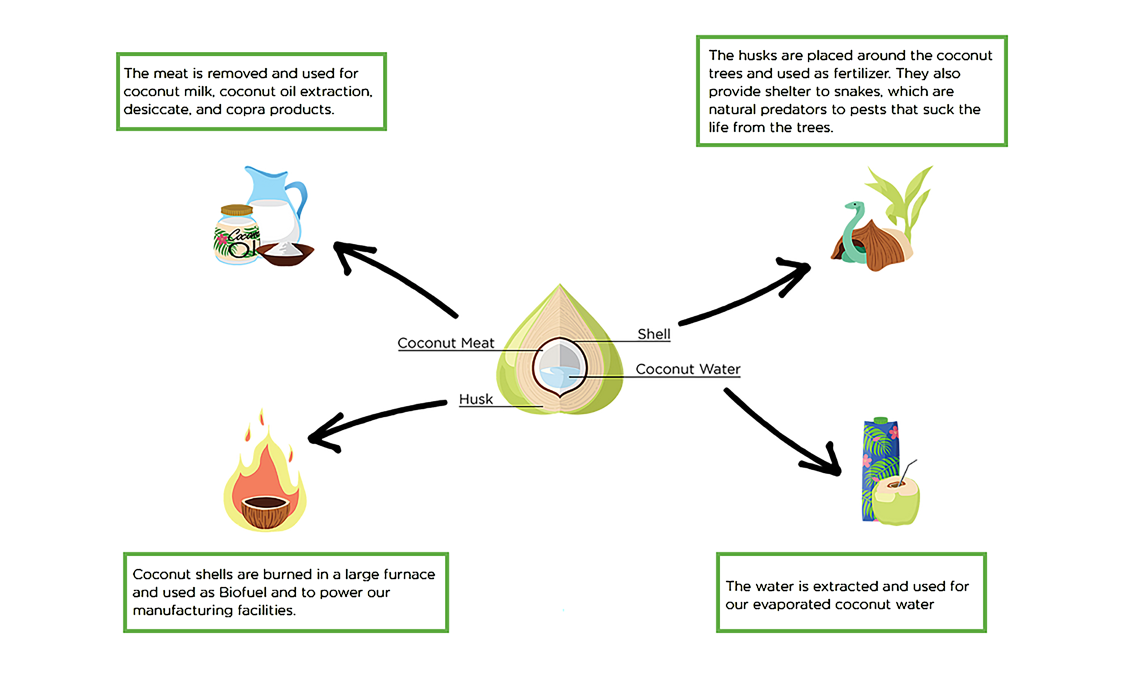
At Green Laxmi Foods, we follow a true Zero Waste Philosophy where every part of the coconut is used responsibly. The coconut meat is processed to make products like coconut milk, coconut oil, desiccated coconut, and copra. The coconut water is extracted and used in our evaporated coconut water products.

The husks are placed around the coconut trees as natural fertilizer and also provide shelter for snakes, which help control harmful pests. Coconut shells are burned in large furnaces to create biofuel, which powers our manufacturing facilities.

Every layer of the coconut is reused—ensuring sustainability, eco-friendly production, and a greener future.

Effluent Treatment Plant

At our facility in India, we have an effluent treatment plant (ETP); a system designed to treat industrial wastewater so that it is safe to reuse. The water moves through 4 treatment levels consisting of physical, chemical, and biological mechanisms, cleansing the water so that it can be safely recycled. Once the water moves through the ETP, the same water supply is used by our farmers and their villages for farming, cleaning, and more.


Get in Touch for any Information!

Feel free to reach out if you need any information or assistance. We’re here to help and answer any questions you may have!

Contact Us

    Cart (0 items)